
ABOUT - MEZIAN
Music Between Worlds
Early Roots and Musical Awakening
sound as emotion, memory, and movement
beyond language
Before I had words for it, music was already speaking to me. I was born in Lebanon to Kabyle parents of Algerian descent, with grandparents who had lived through the Ottoman and British Mandate years in Palestine. In our home, cultures met in melody. Mornings often began with Fairuz, nights ended with Umm Kulthum, Abdel-Wahab, or Baligh Hamdi, whose compositions still haunt me with their beauty.
I grew up alongside Matoub, Takfarinas, Aït Menguellet, and the timeless Qudud Halabiyya of Aleppo. The voice of Abdelbaset reciting the Qur’an filled the house with a sense of reverence that has never left me.
By first grade, I was drumming on school tables, chasing rhythms I couldn’t yet name. My father brought me a darbuka from Syria, and years later in Damascus, I learned to speak rhythm in syllables: Dom, Tak, Sak, Es. These sounds opened a door into an ancient world of pulse and pattern — Sama’i, Malfuf, Wahda w’Noss, Maqsum, Masmudi, Karachi — rhythms that still flow through my work today.
By eighth and ninth grade, I dreamed of being a DJ, immersed in the German trance scene, calling myself DJ Cosmos, burning CDs, and playing them at school. But that dream shifted — I wanted to rap. In a small youth studio, I discovered something that changed my path: beats could be programmed. Using ACID, I built more than twenty-five beats in my first two months, studying my heroes — Kanye West, Dr. Dre, Pharrell, Timbaland, DJ Premier — recreating their samples and learning rhythm and soul, one sound at a time.
Shaping a Hybrid Sound
From Beats
to Emotional Expression
I became obsessed with sound. Nights blurred into mornings reading Gearslutz and FutureProducers, learning microphones, compressors, and the subtle alchemy of mixing. In 2010, a recording engineering course taught me the discipline of Pro Tools, analog consoles, and acoustic science. Recording a jazz band for my final project showed me the studio itself is an instrument, capable of shaping emotion.
Today, I create in my own acoustically balanced studio. My process is hybrid: I sample and play, manipulate MIDI, record live takes, and mix through outboard gear and UAD plugins. My technique borrows loosely from Michael Brauer’s ABCD model — mixing into compressors, using hardware not only to control, but to color.
My sound lives between worlds: the modal expressiveness of Middle Eastern music, the structural grace of European classical chamber works, and the pulse of hip-hop, funk, and jazz.
To me, music is emotion. The mathematics, the technical sophistication, the signal chains and routing — they are only the shell.
The essence lies in feeling. Plotinus wrote that music awakens the soul to feeling, and al-Fārābī said each mode carries a distinct emotional power. I live in that belief: every sound I make seeks to evoke a moment, a vibration beneath language, something unmistakably felt.

Mezian
Sound Beyond Language
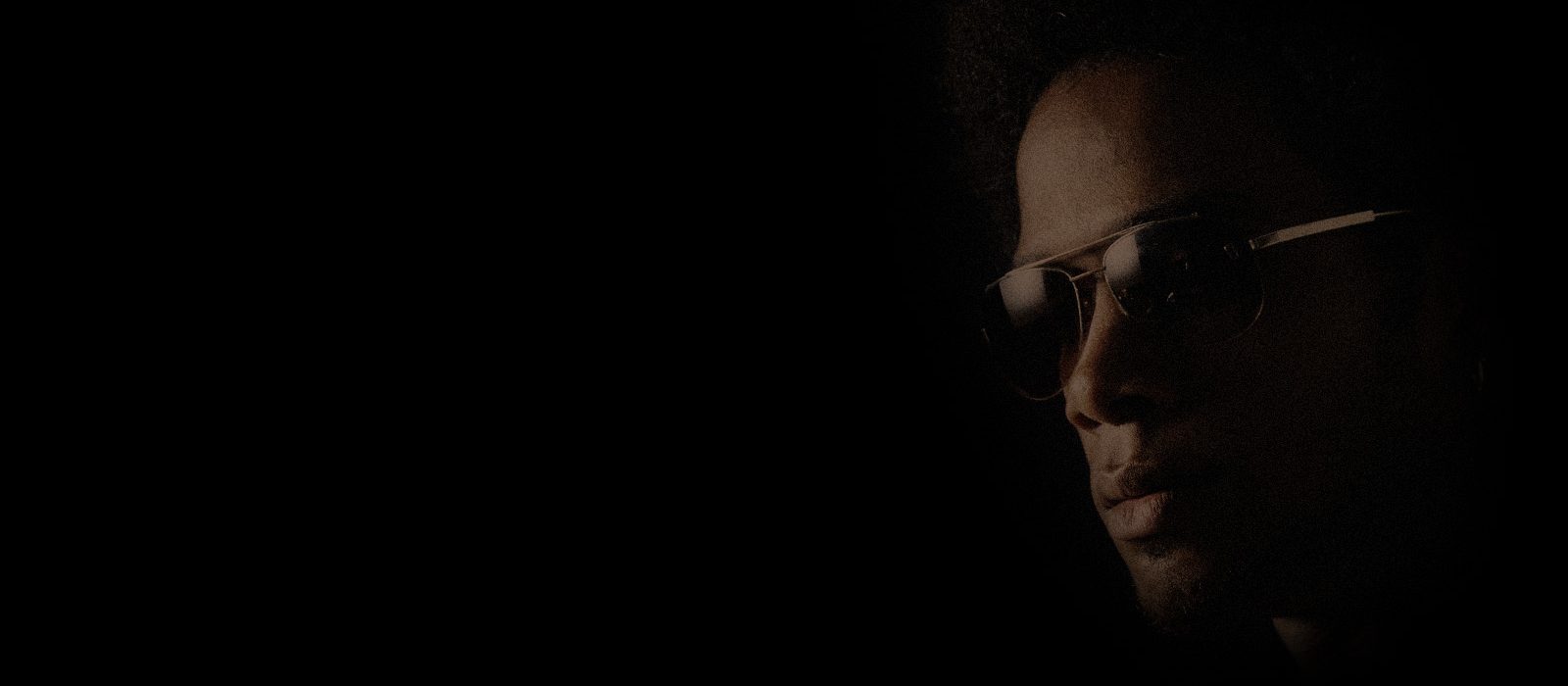
My name is Mezian — Kabyle for the young, the beautiful, the youthful. I’ve always loved how it sounds: familiar and foreign at once, Arabic and Kabyle, yet strange to Danish ears. It captures who I am — a fusion of histories, languages, and emotions — forever translating feeling into sound, forever searching for harmony between the worlds I come from and the worlds I dream of.